
Choosing the right baby play mat is essential for supporting your child’s motor skills development. Look for play mats that include various textures and interactive elements to engage your child’s senses. Mats with features like different colors, crinkly fabric, and attached toys encourage reaching, grasping, and crawling, which help in muscle and motor skill growth.
When selecting a play mat, safety should be your top priority. Ensure it has a non-slip surface and is free from small parts that could pose a choking hazard. A good play mat will provide a clean, secure spot for your baby to explore, promoting physical milestones and cognitive development.
For parents seeking the best baby play mat, a well-designed mat can make all the difference. Choose mats that offer a blend of comfort, support, and sensory experiences to make playtime both fun and beneficial for your little one.
Key Features of Baby Play Mats for Motor Skills Development
When choosing a baby play mat to support motor skills development, it’s important to focus on the material and safety, sensory and cognitive improvements, and the design and additional functions. Here’s a detailed look at what to consider for each feature.
Material and Safety
Ensuring your baby’s play environment is safe is important. Look for play mats made from non-toxic materials. They should be free of harmful chemicals and safe for your baby to touch and mouth. Organic cotton and BPA-free foam are good examples.
The play mat should also be easy to clean and maintain. Babies tend to make a mess, so having a surface that you can wipe down quickly is a huge plus. This helps keep the play area hygienic and safe.
Additionally, an eco-friendly option benefits both your baby and the environment. Consider mats that are made from sustainable materials or those that are biodegradable.
Sensory and Cognitive Improvements
Baby play mats should offer a range of sensory experiences. Mats with different textures and patterns stimulate your baby’s tactile senses. Look for contrasting colors and bold patterns which help develop visual perception.
Incorporating sensory toys into the play mat can further improve sensory development. Toys that make sounds or that encourage grasping, swiping, and reaching help improve hand-eye coordination and fine motor skills. Some mats also include mirror toys and teething rings, adding more layers of sensory engagement.
Visual and auditory elements on the mat play a significant role in cognitive development. Consider mats that have built-in rattles, squeakers, or crinkle sounds. This variety keeps your baby engaged and helps in hearing and seeing different responses.
Design and Additional Functions
A well-designed baby play mat can grow with your child. Choose a play mat that doubles as a baby play gym. Mats that have arches with dangling toys promote crawling and rolling, contributing to gross motor skills development.
Portability and storage are also essential. You’ll want a mat that you can easily fold up and transport. Some mats come with carrying cases which make them convenient for travel.
Check for mats that come with additional accessories. Interchangeable toys and attachable elements can keep the experience fresh and engaging for your baby. A cover to convert the play mat into a play fort can add longer-term value, entertaining toddlers as well.
Supporting Physical and Developmental Milestones
Baby play mats play a key role in supporting your baby’s physical and developmental milestones. They provide a safe space for activities that promote motor skills and encourage both independence and social interaction.
Promoting Gross and Fine Motor Skills
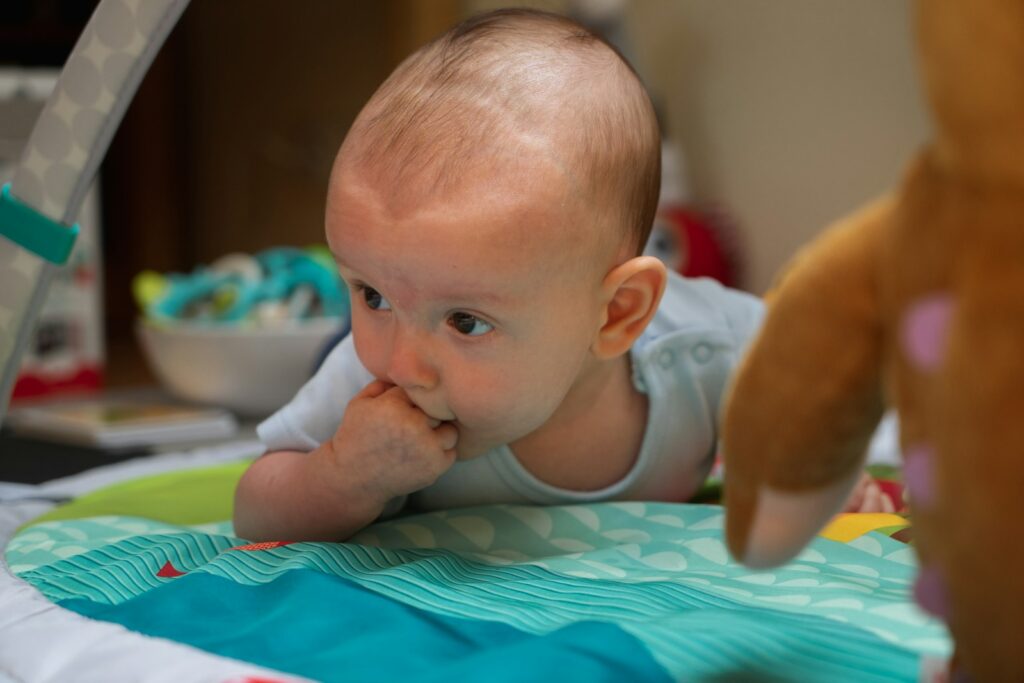
Baby play mats help with the development of both gross motor skills and fine motor skills. Gross motor skills involve large muscle activities like tummy time, which strengthens your baby’s neck, back, and shoulder muscles. This is necessary for milestones such as crawling and walking.
Fine motor skills involve smaller movements, such as grasping toys or turning pages in a fabric book. These activities improve hand-eye coordination and dexterity. Mats with varied textures and attached toys encourage your baby to use their hands, which helps in developing these important skills.

Encouraging Independence and Interaction
Baby play mats also help your baby develop independence and social skills. For example, independent play on these mats allows your baby to explore and learn autonomously, building cognitive development and self-confidence.
Interactive features, like mirrors and sound-making toys, can improve social interaction and bonding with caregivers. These elements help with sensory development, making your baby more aware of their surroundings. As a result, they become more adept at interacting with others and understanding social cues.
In sum, a well-designed baby play mat supports important developmental milestones by promoting motor skills and encouraging both independence and interaction.
Conclusion
Choosing the right baby play mat can significantly impact your baby’s motor skills development. Look for features like safety, sensory stimulation, and durability. A good play mat should provide a supportive surface for core strength and balance. Ensure the mat encourages activities like tummy time and offers a clean, engaging space for your baby.