If you’re looking to get into woodworking and construction, with a view to tackling some simple tasks around the home, then investing in a few choice tools might be worthwhile. But, when you come to consider the breadth of options available, you might quickly find yourself overwhelmed – especially when it comes to saws and saw blades.
Let’s run through a few of the common choices, and see what’s right for you.
Circular saw
This device comes with a circular blade that can be used to cut through a range of materials. They’re excellent for breaking down sheet materials into manageable chunks. These saws are potentially among the most dangerous, since they pack a lot of power into a handheld tool. Make sure that you watch for kickback, and that you’re keeping both hands on the blade at all times.
Reciprocating saw
A reciprocating saw goes back and forth, rather than round and round. It’s a little bit like a very large electric meat-carver, except it will go through plasterboard and timber. It’s a great choice if you’re tearing down walls.
Mitre Saw
A mitre saw is a stationary saw that can cut long pieces of timber and metal across the grain. For this reason, they’re often called cross-cut saws. There are a few options to consider, including the diameter of the blade, and the angle and bevel you’re going to be cutting at. Some mitre-saw saws will also slide back and forth.
This is quite a specialised device that will perform its job very efficiently indeed. If you know you’re going to be dealing with lots of constructional timber, then it’s an obvious purchase. Invest in quality, here: Milwaukee mitre saws will last for years, when supplied with the right blades.
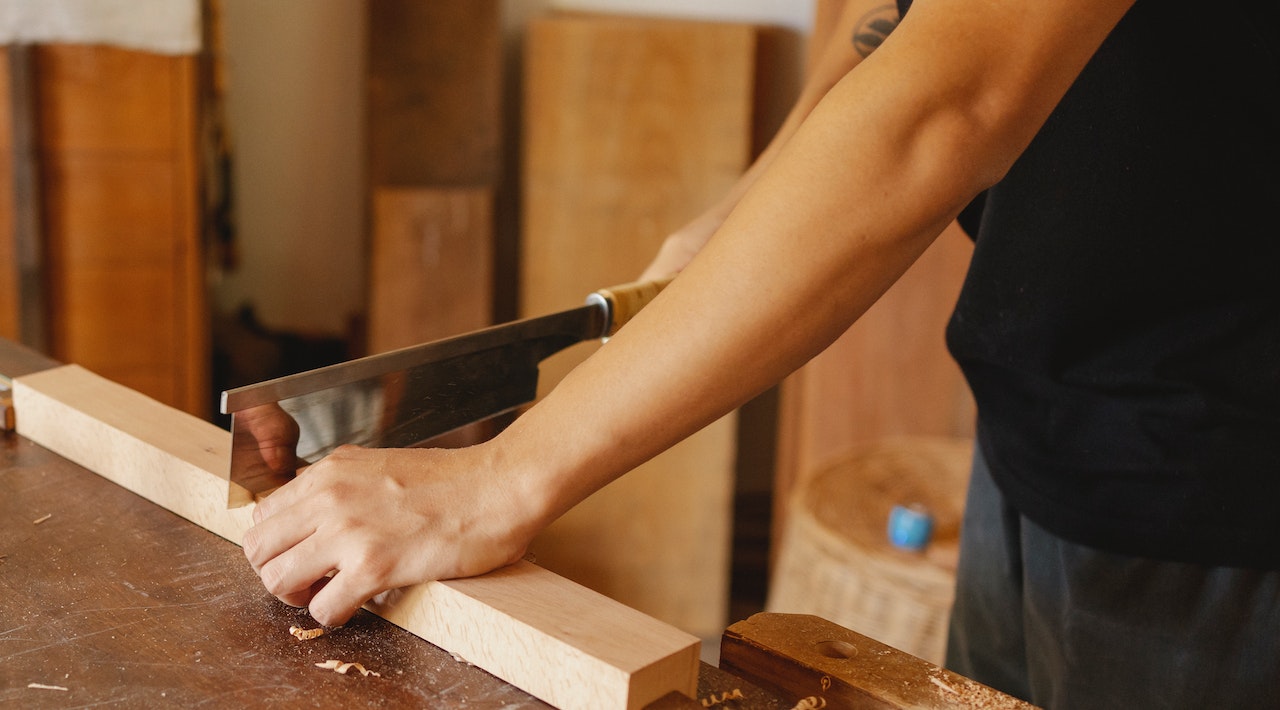
Japanese hand saw
If you’re looking for a hand-saw, then it might be worth looking at a Japanese blade. In East Asia, blades are traditionally constructed such that wood is removed on the pull rather than the push. You’ll find Japanese blades with teeth on both sides, which makes them excellent for performing both cross and rip cuts.
Table saw
Finally, we come to what is probably the most powerful and versatile variety of saw. It’s a little bit like a circular saw, except that you’re pushing the workpiece into the moving blade, rather than vice versa. There are a few precautions to bear in mind: you’ll need a riving knife, which is there to prevent the rear of the workpiece from catching on the back of the blade and causing kickback. If you know what you’re doing, then you can perform just about any kind of straight cut using a table saw. Just don’t try to make freehand cuts.