
Suffering from screen-related eyestrain is a real pain. Using screens in everyday life is almost unavoidable – luckily, dealing with “screen eyes” isn’t.
There are a number of thing you can do to both prevent and remedy any eyestrain caused by using screens.
What is meant by “Screen Eyes”?
Screen eyes refers to the discomfort a person feels in their eyes due to using screens.
Generally, if you’re looking at a screen, it’s likely to change a few things that affect how comfortable your eyes feel.
For a start, staring at a screen slows down your blink rate. This means you blink fewer times per minute – which might not seem like much of an issue, but trust me, it is.
Blinking is what keeps your eyes hydrated and nourished with oxygen. We rely on our tears to make our eyes feel fresh and lubricated. When our eyes start to dry out, discomfort occurs.
Another issue with staring at screens is that our focus is fixed in a single position. When we look at screens, we tend to be looking at a point that is relatively close to us. This makes the muscles in our eyes work a little harder, which can cause discomfort and sometimes lead to tension headaches and pains behind the the eyes.
How to Treat and Prevent Screen Eyes
The best way to tackle screen eyes head on is to look at both treating the symptoms and preventing any more discomfort from occurring. Struggling with screen eyes doesn’t need to be a long-term problem. With a few sensible changes you can fix the issue for good and prevent it from coming back!
Below are some of the best ways to deal with screen eyes – both prevention and cure!
Use Eye Drops

One of the biggest issues with using screens is dry eyes (for the reasons mentioned above).
Dry eyes can feel prickly and sore, and really affect how well you can work. If something is bothering you, it can be a huge unwanted distraction.
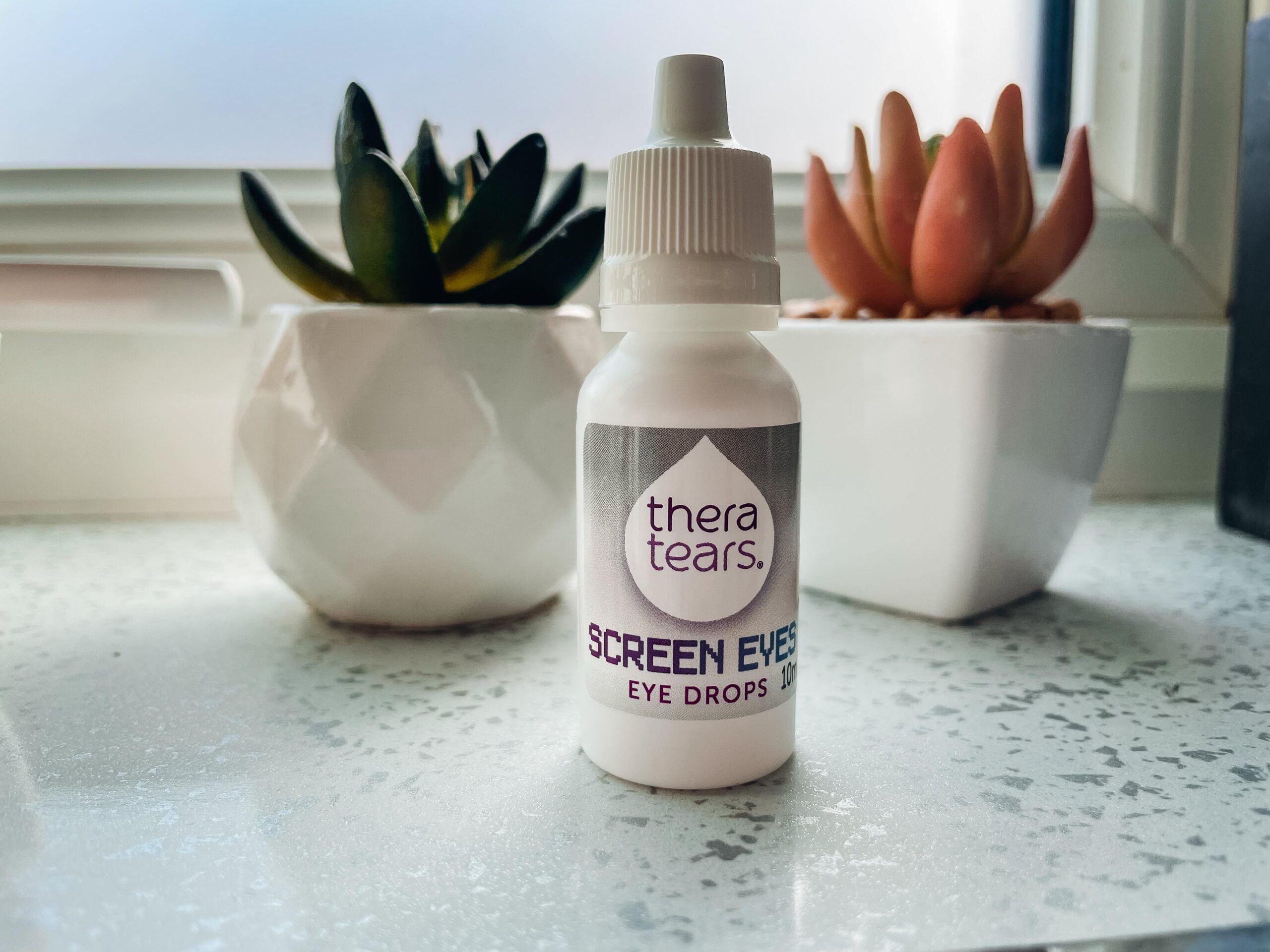
One way to combat dry eyes is to use eye drops. Thera Tears Screen Eyes eye drops have been made specifically with screen users in mind. These are lubricating eye drops that you can use any time your eyes are feeling prickly and dry.
The drops work like artificial tears in that they create more wetness and hydration on the front surface of the eye. These shouldn’t be confused with and iotim eye drop – which have a different function and instead treat medical conditions like glaucoma.
What makes these drops special is that they are also suitable for contact lens wearers, which is something not all eye drops can boast.
Blink More
Alongside using lubricating eye drops, you can make a conscious effort to blink more.
This can feel a little strange at first, as blinking isn’t usually something you have to put effort into.
Increasing your blink rate can help your eyes do a better job of staying hydrated. After a few days of making an effort to blink more, it should become a habit and come more naturally.
Stay Hydrated

Keeping your body hydrated helps to keep your eyes hydrated. Working hard can be quite distracting and if you get deep into what you’re doing, you might forget to drink.
Get yourself a large water bottle and aim to sip your way through it until your lunch break. When you’re on your lunch, fill it again for the afternoon and repeat the process.
If you work in an office environment you can become dehydrated more easily than usual. If the heating isn’t on, there might be air con to contend with, so this is something you should consider all year round.
Employ the 20:20:20 Rule
You might have heard of the 20:20:20 rule as it’s something people who work on screens a lot should be told about. In reality, it’s hit and miss whether people who use screen a lot know about it.
The rule basically suggests that every 20 minutes you should give your eyes a break and stare 20 metres into the distance for 20 seconds. This stops your eyes being fixed in that one position for hours at a time and can prevent tension headaches causes by eyestrain.
Get and Eye Test
Even if you don’t wear glasses, you should get an eye test every 2 years (or yearly if your optometrist advises).
Eye tests don’t just check for a prescription, but also the overall health of your eyes. Sometimes, you might have a slight prescription that doesn’t bother you in day-to-day life, but might help relax the muscles in your eyes when using screens.
You might also benefit from special coatings or tints if you feel muscular eye strain from working on a screen.
Light basic tints can help filter the bright lights a screen produces and ease and discomfort. Specialist tints that eliminate blue light are also available, as well as anti-reflection coatings that reflect blue light on the front surface of the lens so it can’t pass through to your eye.
By discussing your options with a dispensing optician after your test you’ll be able to make an informed decision on what will work best for your specific needs.