
Table of Contents:
- Cost Savings and Financial Incentives of Going Solar
- Achieving Energy Independence with Solar Installations
- The Potential Impact on Home Value After Solar Installation
- Technological Advancements in Residential Solar Systems
- Navigating Solar Incentives and Tax Benefits
- The Role of Homeowners in the Renewable Energy Revolution
- Understanding the Solar Panel Installation Process
- Maintenance and Care for Your Home Solar System
Modern homeowners continuously seek methods to reduce their environmental impact and enhance their financial stability. Solar energy, a beacon of renewable resources, offers this dual advantage. Like those involved in solar power companies Utah, it’s more feasible than ever for residents to tap into the abundant energy provided by the sun. This article will explore various facets of residential solar power, highlighting how going solar is an environmentally conscious choice and an economically wise one.
Cost Savings and Financial Incentives of Going Solar
Financial concerns often dictate household decisions, and the adoption of solar power is no exception. The decrease in the large monthly utility bill is the most alluring feature of solar energy. Solar panels reduce the quantity of energy that homeowners must buy from utility providers by converting sunshine into electricity that may be fed into the home or back into the grid. Beyond the immediate cost savings, the long-term return on investment can be substantial, factoring in the longevity of solar panels—often 25-30 years—and the protection against rising energy costs.
Achieving Energy Independence with Solar Installations
In a world troubled by energy scarcity and geopolitical conflicts over resources, solar installations provide a route to energy independence that is both practical and empowering. Solar power users contribute to reducing a country’s dependence on imported fuels, enhancing national security and resilience against energy supply disruptions. They are cushioned from the volatilities of energy markets and can even receive credit from utility companies for excess power supplied back to the grid through net metering agreements. The benefits thus cascade from the individual level to the national, bolstering overall energy security and establishing a solid framework for autonomous energy production.
The Potential Impact on Home Value After Solar Installation
Investing in solar power can yield dividends when it comes to home valuation. Homes adorned with solar systems are often more attractive to environmentally conscious homebuyers, who are willing to pay a higher premium for such properties. This increase in property value makes going solar not just an environmental statement but also a wise financial investment.
Technological Advancements in Residential Solar Systems
Advancements in solar technology are continuously enhancing the cost-effectiveness and efficiency of residential solar systems. Innovations like bifacial solar panels, which capture sunlight on both sides and aesthetically pleasing solar tiles ensure that solar systems can be seamlessly integrated into the design of modern homes. Furthermore, advancements in battery technology allow for the storage of excess energy generation, providing a measure of reliability and independence from the grid that wasn’t possible before. These improvements in technology are not only making solar power more accessible but also strengthening solar systems’ capabilities to provide consistent, sustainable energy.
Navigating Solar Incentives and Tax Benefits
The landscape of solar incentives and tax benefits is dynamic, providing financial motivation for homeowners to transition. From tax credits that directly reduce the amount of federal tax owed to performance-based incentives, the range of financial incentives available can effectively lower the overall investment in solar power systems. Additional programs allow solar installation costs to be paid off gradually as part of the property tax bill, proving advantageous to those hesitant due to upfront costs.
The Role of Homeowners in the Renewable Energy Revolution
Every homeowner who switches to solar energy adds a ripple to the rising tide of renewable energy adoption. These individual actions, taken collectively, encourage investments in renewable infrastructure and influence policy decisions that facilitate a shift away from non-renewable energy sources. Homeowners enjoy the benefits of green living and contribute to a more significant societal change that reinforces the significance of sustainable living practices and the importance of protecting our planet for future generations.

Understanding the Solar Panel Installation Process
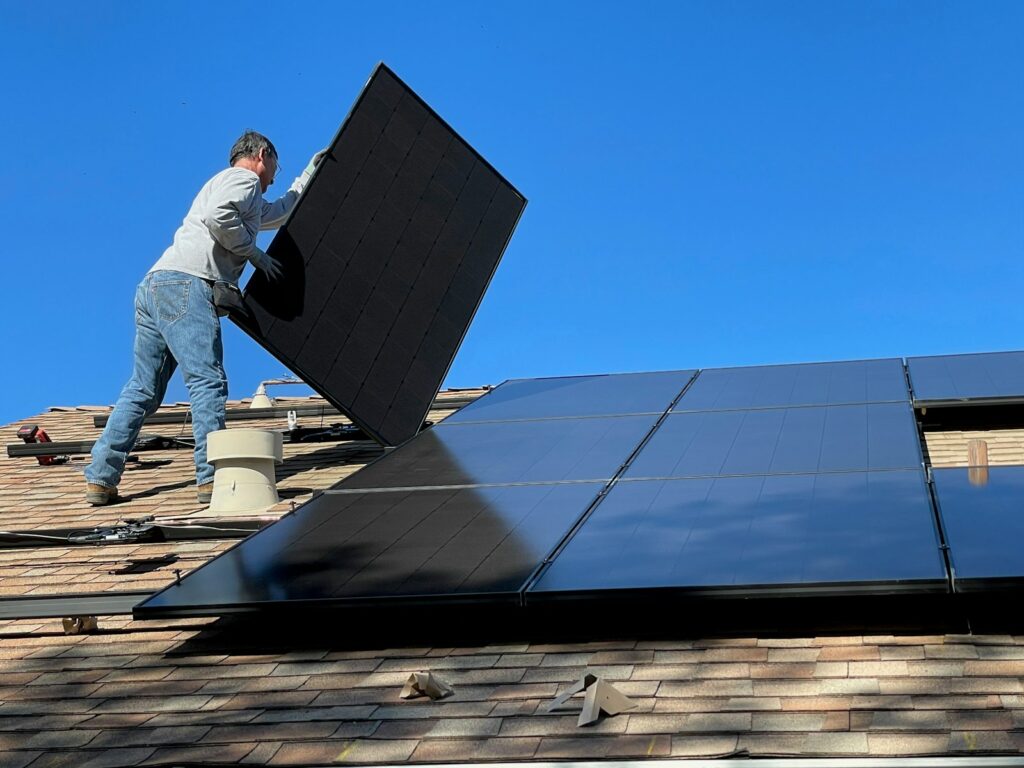
The decision to invest in a solar power system is significant, and understanding the installation process is essential for those interested. The journey towards a solar-powered home typically commences with a thorough site assessment to determine the property’s suitability and the system’s size required. This is followed by designing a customized solar solution, acquiring the necessary permits, and installing the system. After installation, an inspection is conducted, and the system is connected to the grid after approval. Professional solar installers play a crucial role in navigating through these steps, making the transition to solar smooth and streamlined.
Maintenance and Care for Your Home Solar System
Maintaining a solar power system is straightforward and generally low maintenance. The primary maintenance task for most systems is ensuring the solar panels remain clean and unobstructed by debris, dust, or snow, which could reduce efficiency. Monitoring systems are beneficial as they provide homeowners with real-time information about their system’s performance, enabling proactive responses to potential issues. Routine maintenance is critical to maximizing the lifespan and efficiency of solar power systems, ultimately ensuring the best return on investment.